
Wednesday One Thing - The Greatest Marketing Line Ever Invented
Wednesday One Thing - The Greatest Marketing Line Ever Invented

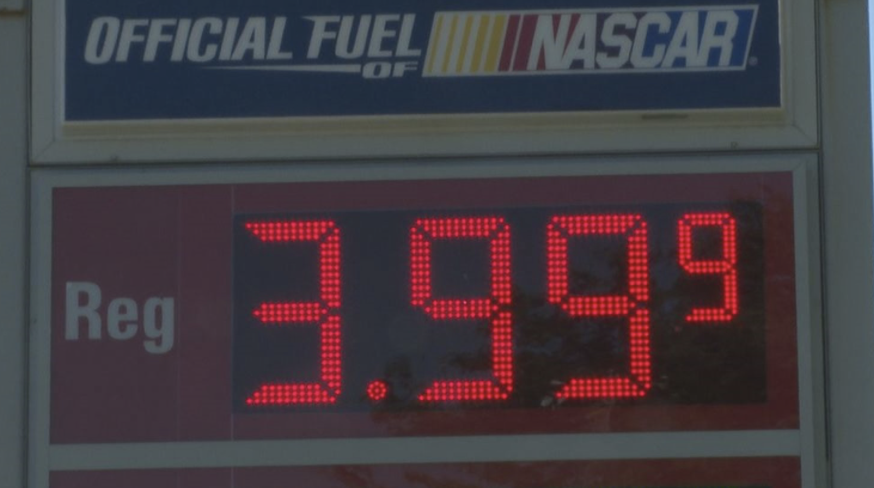
The Greatest Marketing Line Ever Invented.
It's two characters. It's changed everything. And you fall for it every single day.
You think you're smart. You've got a college degree, maybe two. You read. You research. You negotiate. You pride yourself on not being fooled. And yet — every single time you pull up to a gas pump, you get played. Masterfully. Completely. Without a fight.
The sign says $3.99.
Your brain says three dollars.
That's it. That's the whole trick. And it is, without question, the single most effective marketing invention in the history of commerce.
You're not paying four dollars for gas. You're paying three dollars… and then there's this little awkward pause… and then ninety-nine cents.
Here's what's actually happening inside your skull: your brain processes numbers the same way it reads words — left to right, first impression wins. The moment you see the 3, your brain files it under "three dollar gas" and moves on. The .99? That registers as noise. Change. Rounding error. Not a real dollar. Behavioral economists call it left-digit anchoring, and it is one of the most ruthlessly exploited quirks in all of human psychology.
The gas station doesn't charge $3.999 by accident. They charge it because they know exactly what your brain does with that number. They've known it for over 100 years.
One cent. That's the entire gap between reality and perception. One penny is the difference between feeling like you're paying $3 for gas and knowing you're paying $4. The most cost-effective manipulation in the history of retail — and it costs the seller nothing.
This didn't start at the gas pump. It started in the 1880s, in dry goods stores and department stores, where retailers figured out that forcing clerks to open the register to make change reduced theft. Odd pricing was a loss prevention tool. But somewhere along the way, a very clever person noticed something far more interesting: customers liked it. They felt like they were getting a deal. A $1.99 item felt meaningfully cheaper than a $2 item. Not a little cheaper. Categorically cheaper.
That insight — that perception and reality don't have to match, and that one cent of difference can create an entirely different emotional experience — is worth billions of dollars annually to the American retail economy. Every grocery store. Every gas station. Every car dealership advertising a lease for $299 a month. Every software company charging $9.99 instead of ten bucks. Every single one of them is using the same two characters that some anonymous 19th century shopkeeper accidentally stumbled onto.
The reason this is genius — actual genius, not the overused Silicon Valley kind — is that it works even when you know it's happening. Right now, reading this, you understand the psychology completely. You know that $3.99 is essentially $4. You can do the math. And the next time you're at the pump, you will still feel slightly better seeing a 3 at the front of that number than you would seeing a 4.
That's not stupidity. That's how human brains are wired. We are not computers. We don't process $3.99 and $4.00 as a 0.25% difference. We process them as belonging to entirely different psychological categories. Three-something. Four-something. Those aren't the same thing. The jump from $3 to $4 feels like a wall. The jump from $3.99 to $4.00 feels like nothing. And that irrational gap — that one cent of felt difference — is the greatest marketing line ever written.
Nobody trademarked it. Nobody got rich off the idea itself. It belongs to everyone, which means every business on earth gets to use it forever, for free.
One cent. Infinite leverage. The house always wins.
